drop down

Alok Tripathi The Name Is Enough * Anouncements:New Articles are added. * Anouncement 2: You can now contact us using contact form at bottom of the website.
#htmlcaption1 Thanks For Visiting Pure Reading. Stories. Technology. Share Article With Friends! Stay Blessed
Showing posts with label Agra fort. Show all posts

Statue of liberty Facts


Statue of liberty :- 


The story of the Statue of Liberty and her island has been one of change. With the placing of “The New Colossus” on a plaque in the pedestal in 1903, Lady Liberty’s significance grew as an inspiration to immigrants who sailed past her on their way to America. The Statue was placed upon a granite pedestal inside the courtyard of the star-shaped walls of Fort Wood (which had been completed for the War of 1812).


The United States Lighthouse Board had responsibility for the operation of the Statue of Liberty until 1901, when the care and operation of the Statue was placed under the War Department. A Presidential Proclamation declared Fort Wood (and the Statue of Liberty within it) a National Monument on October 15, 1924, and the monument's boundary was set at the outer edge of Fort Wood. In 1933, the care and administration of the National Monument was transferred to the National Park Service.

On September 7, 1937, jurisdiction was enlarged to encompass all of Bedloe's Island and in 1956, the island's name was changed to Liberty Island. On May 11, 1965, Ellis Island was also transferred to the National Park Service and became part of the Statue of Liberty National Monument. 


Why did the French gives us the statue of Liberty :- 


people commemorating the alliance of France and the United States during the American Revolution. Yet, it represented much more to those individuals who proposed the gift.
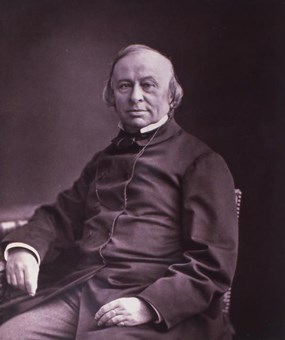
 
A photograph of Edouard de Laboulaye from the Galerie Contemporaine collection.

National Park Service, Statue of Liberty NM

In 1865, Edouard de Laboulaye(a French political thinker, U.S. Constitution expert, and abolitionist) proposed that a monument be built as a gift from France to the United States in order to commemorate the perseverance of freedom and democracy in the United States and to honor the work of the late president Abraham Lincoln. Laboulaye hoped that by calling attention to the recent achievements of the United States, the French people would be inspired to create their own democracy in the face of a repressive monarchy. In 1865, France was divided between people who were still committed to the monarchy and people who supported the Enlightenment ideals (the belief that people had natural rights to life, liberty, and the pursuit of happiness). It was the hope of many French liberals that democracy would prevail and that freedom and justice for all would be attained.
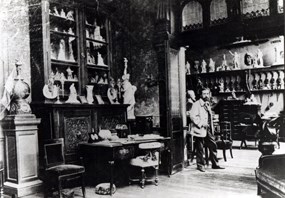
 
Bartholdi in his studio, Vavin Street, Paris, 1892.

National Park Service, Statue of Liberty NM

In order to turn his idea into a reality, Laboulaye talked to many prominent and influential men in France. Auguste Bartholdi - a French sculptor who had recently been commissioned to make a bust of Laboulaye - greatly supported Laboulaye's idea and was soon selected to be the sculptor of the proposed monument.
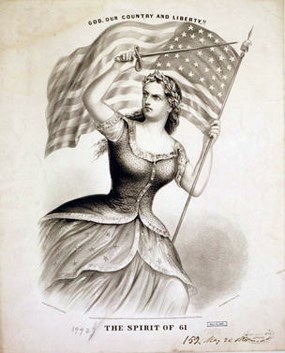
 
A picture entitled “The Spirit of 61. God, Our Country and Liberty!” by Currier and Ives circa 1861.

Library of Congress

"Liberty" was a controversial idea in the 19th century. To many people it suggested violence and revolution. Laboulaye and Bartholdi agreed that their monument should not be seen as leading an uprising, but rather as lighting the way, peacefully and lawfully. A key element was the name they gave to the Statue: Liberty Enlightening the World. Bartholdi's public monuments hailed back to classical images of a powerful, honorable national authority over any ideology. His statue of "Liberty Enlightening the World" would be above conservatism and liberalism and above radical revolutions and political turmoil. She would be an international symbol of liberty, justice, and democracy. In 1871, the Statue was transformed from idea into reality - it was to be funded, built, and presented to the United States.

This project could not have happened at a better time for Laboulaye. In 1871, an uprising by members of the working and middle classes in Paris against the government was brutally crushed. Laboulaye did not support such extremism among laboring people; although he wanted to change the French government to a democratic government, he did not want to do it through violence. Despite his liberal views, Laboulaye was criticized by his colleagues because he spoke out against the violence and supported the governmental repression of the uprising. The creation of the Statue of Liberty, however, was a chance for Laboulaye to restore his reputation as a devoted liberal and democratic advocator, honor the success of liberty in the United States, and hope that the French would be inspired to fight for the same ideals.


Why is the statue of liberty a woman :-


According to historian Edward Berenson, in the 1860s, Bartholdi decided to build a monument to commemorate the opening of Egypt's Suez Canal. "And that monument was going to be a woman in the southern opening of the canal holding up a torch over her head and that woman was dressed in Arab peasant garb,” Berenson says.


When was the Statue of Liberty built?

history of the statue of liberty in pieces

history of the statue of liberty in pieces Construction began in 1875 and was not completed until 1884. Crews worked round the clock, seven days a week, for nine years to finish the Statue of Liberty. When it was complete in 1885, the statue was disassembled into 350 pieces, shipped to New York City, and reassembled. It took 4 months just to put the Statue of Liberty together again!

The Statue of Liberty was officially dedicated and unveiled on October 28, 1886.

How much did the Statue of Liberty cost to build?

How much did the statue of liberty cost to build?

A collection was taken up in France to fund the statue, raising 2,250,000 francs ($250,000 U.S. dollars). It doesn’t look like much, but $250,000 in the 19th century would be the same as millions of dollars today. Both the U.S. and France participated in fundraising activities, and it took a very long time to raise enough money to finish construction.

Statue of Liberty: Assembly and Dedication


While work went on in France on the actual statue, fundraising efforts continued in the United States for the pedestal, including contests, benefits and exhibitions. Near the end, the leading New York newspaperman Joseph Pulitzer used his paper, the World, to raise the last necessary funds. Designed by the American architect Richard Morris Hunt, the statue’s pedestal was constructed inside the courtyard of Fort Wood, a fortress built for the War of 1812 and located on Bedloe’s Island, off the southern tip of Manhattan in Upper New York Bay.

In 1885, Bartholdi completed the statue, which was disassembled, packed in more than 200 crates, and shipped to New York, arriving that June aboard the French frigate Isere. Over the next four months, workers reassembled the statue and mounted it on the pedestal; its height reached 305 feet (or 93 meters), including the pedestal. On October 28, 1886, President Grover Cleveland officially dedicated the Statue of Liberty in front of thousands of spectators.


The Statue of Liberty and Ellis Island


In 1892, the U.S. government opened a federal immigration station on Ellis Island, located near Bedloe’s Island in Upper New York Bay. Between 1892 and 1954, some 12 million immigrants were processed on Ellis Island before receiving permission to enter the United States. From 1900-14, during the peak years of its operation, some 5,000 to 10,000 people passed through every day.


Agra fort information

Agra fort :- A preface to the famous Taj                               Mahal

                    Agra fort entry gate :- Amar sing gate.           


The entry to Agra Fort is allowed through the Amar Singh Gate only. Some portion of this fort is used by the Indian Army. The public access to that part has been prohibited. So you can not see that area.

However as this fort is very expansive and contains many buildings that are worth a visit so you can very well check them out.

On visiting the Agra Fort, you will come across Diwan-i-Am or the Hall of Public Audience. This hall with numerous pillars is said to be erected by Shah Jahan in the year 1628. On heading little forward, you will see Royal Pavilions abounding in elegant mosques including Nagina Masjid and Mina Masjid, palaces like Macchi Bhavan, Khas Mahal, Shish Mahal and Shah Jahani Mahal and the Zenana Mina Bazaar.

On a visit to Agra Fort, you will be attracted to the intricate carvings and the pure marbles that are used in its making. Besides, the breathtaking views of the Yamuna River and Taj Mahal from the balconies of the pavilions will leave you absolutely mesmerized.


                                   Agra fort entry gate

Agra Fort is a historical fort in the city of Agra in India. It was the main residence of the emperors of the Mughal Dynasty till 1638, when the capital was shifted from Agra to Delhi. The Agra fort is a UNESCO World Heritage site.It is about 2.5 km northwest of its more famous sister monument, the Taj Mahal. The fort can be more accurately described as a walled city.

After the First Battle of Panipat in 1526, the victorious Babur stayed in the fort, in the palace of Ibrahim Lodi. He later built a baoli in it. His successor, Humayun, was crowned in the fort in 1530. He was defeated at Bilgram in 1540 by Sher Shah Suri. The fort remained with the Suris till 1555, when Humayun recaptured it. Adil Shah Suri’s general, Hemu, recaptured Agra in 1556 and pursued its fleeing governor to Delhi where he met the Mughals in the Battle of Tughlaqabad. Sheesh Mahal, Agra Fort:The effect produced by lighting candles in Sheesh Mahal, Agra Fort.

Realising the importance of its central situation, Akbar made it his capital and arrived in Agra in 1558. His historian, Abul Fazl, recorded that this was a brick fort known as ‘Badalgarh’. It was in a ruined condition and Akbar had it rebuilt with red sandstone from Barauli area Dhaulpur district, in Rajasthan. Architects laid the foundation and it was built with bricks in the inner core with sandstone on external surfaces. Some 4,000 builders worked on it daily for eight years, completing it in 1573.

It was only during the reign of Akbar’s grandson, Shah Jahan, that the site took on its current state. Shah Jahan built the beautiful Taj Mahal in the memory of his wife, Mumtaz Mahal. Unlike his grandfather, Shah Jahan tended to have buildings made from white marble. He destroyed some of the earlier buildings inside the fort to make his own.

At the end of his life, Shah Jahan was deposed and restrained by his son, Aurangzeb, in the fort. It is rumoured that Shah Jahan died in Muasamman Burj, a tower with a marble balcony with a view of the Taj Mahal.

The fort was invaded and captured by the Maratha Empire in the early 18th century. Thereafter, it changed hands between the Marathas and their foes many times. After their catastrophic defeat at Third Battle of Panipat by Ahmad Shah Abdali in 1761, Marathas remained out of the region for the next decade. Finally Mahadji Shinde took the fort in 1785. It was lost by the Marathas to the British during the Second Anglo-Maratha War, in 1803.

The fort was the site of a battle during the Indian rebellion of 1857, which caused the end of the British East India Company’s rule in India, and led to a century of direct rule of India by Britain.


History of Agra fort :-

Agra Fort is known for its rich history. The fort has been owned by many emperors and rulers in the past, undergoing many changes in its appearance. It all began in the year 1526 when the first battle of Panipat was fought between Babur and Ibrahim Lodi of the Lodi dynasty. When Babur defeated Ibrahim Lodi, he made the fort and the palace of Ibrahim Lodi as his home. He then modified the fort by building a huge step well (baoli) inside. The fort soon became an important monument to the Mughals. In fact, Babur’s successor, Humayun’s coronation took place at the fort in the year 1530.

Soon emperors from other dynasties started eyeing the fort and efforts to win over the same began. In 1540, Sher Shah Suri of the Sur Empire waged a war against Humayun and defeated him at Bilgram. Sher Shah Suri took over the ownership of the fort from Humayun and made minor changes to it, so as to suit his own architectural taste. The fort stayed with the emperors of the Sur dynasty for the next 15 years. In 1555, Humayun managed to recapture Agra and with it the fort as well. But a year later, Hemu Vikramaditya, the general and military commander of Adil Shah Suri (final emperor of the Sur dynasty) captured Agra. He pursued the fleeing army to Delhi and the Battle of Tughlaqabad ensued between him and Tardi Beg Khan, the military commander of the Mughals. 
 Tardi Beg Khan lost the battle convincingly and Hemu Vikramaditya crowned himself the king. However, on November 5 1556 and barely a month into the kingship of Hemu, Akbar, along with his army, marched into Delhi and defeated the forces of Hemu. The fort once again belonged to the Mughals, but was fast disintegrating. Back then, it was known as Badalgarh and was built with bricks alone. Realizing its historical and situational significance, Akbar decided to rebuild it with red sandstone.

Inner phase of Agra fort

During the reign of Shah Jahan, the fort was modified considerably and took the current form. Shah Jahan destroyed some of the edifices within the fort and rebuilt it as per his own architectural taste. During the early 17th century, the fort was captured by the Maratha Empire.During this period, the fort saw many owners including various Maratha emperors and their enemies which included a host of Mughal emperors. In 1761, the Marathas underwent a massive defeat at the hands of Ahmad Shah Durrani, founder of the Durrani Empire. The emperors of the Durrani dynasty made the fort their home until 1785. In 1785, the fort was regained by the Marathas under the reign of Mahadji Shinde. The Marathas then lost their battle against the British in the Second Anglo-Maratha War and with it the fort. The British then enjoyed the comfort of the fort until it was handed over to the government of India in 1947.


Speciality in Agra fort :- 

                                 Inner Agra fort

  • Jehangir’s Hauz – Monolithic tank, which was built by Jehangir. It was used in the past for bathing. Now, it is connected with Bengali Mahal.
  • Bengali Mahal – This is a palace of Akbar, which is said to have many secret underground buildings.
  • Akbar Mahal – this is the palace of Akbar, which is in ruins now. Akbar lived his final moments in this palace
  • Babur’s Baoli – This is the first modification made to the fort by Mughals. This stone step well was an important source of water for inmates of the fort.
  • Shahjahani Mahal – This was the first palace, which was in sandstone and was modified into marble palace by Shah Jahan.
  • Nagina Masjid – This is a private mosque built by Shah Jahan for the women of the fort. This mosque is entirely made of white marbles.
  • Ghaznin Gate – This gate is a part of Mahmud of Ghazni tomb. The gate was moved to its current location by British.
  • Diwan-i-Am – This is the Hall of Public Audience, the place where the king talks to his subjects, gets petitions and others. This is a red sandstone structure, which is shell-plastered to look like it is made of white marble.

Inside Agra Fort